
By the Numbers

"Since the start of the Industrial Revolution in the 1760s, humans have lofted some 2650 billion tons of CO2 [pollution] into the atmosphere, raising the concentration of the heat-trapping gas by 50%."
.png)
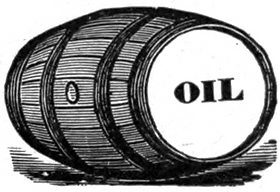
One barrel = 42 US gallons = 159 liters
150 (liters) x 81,000,000 (barrels) = 12,150,000,000
(approximately 12 billion) liters of oil is unearthed every day.

The average [American passenger vehicle] weighs 4,000 pounds [2 tons], according to the U.S. Environmental Protection Agency.
The average freeway speed [USA] is 55 - 70 mph.
How can burning one gallon of gasoline produce … [in an average USA passenger vehicle] approximately 20 pounds of tailpipe carbon-pollution, when 1 gallon of gasoline weighs only 6 pounds?
Most of the weight of the CO2 doesn't come from the gasoline itself, but the oxygen in the air.
When gasoline burns, the carbon and hydrogen separate. The hydrogen combines with oxygen to form water (H2O), and carbon combines with oxygen to form carbon dioxide (CO2).
How much tailpipe carbon dioxide (CO2) is produced by driving one mile?
The average passenger vehicle emits about 400 grams [.9lbs. / almost 1 pound] of CO2 per mile.

“.44 pounds of pollution per km [are generated by an] average passenger [during] air travel,
[or] .7 pounds per mile” in an economy seat.
Commercial airliners generally take off between 160-180 mph.
The weight of Boeing 787-10 is 500,000 lbs [250 tons]; its average cruising speed is 600 mph.
Typically, aircraft fly around 35,000 feet above sea level.

For humans, the typical respiratory rate for a healthy adult at rest is 12–20 breaths per minute.
There are 60 seconds in an hour, and 24 hours in a day: 60 x 24 = 1440.
So, on average, you take (1440 X 16) = 23,040 breaths per day.
How much oxygen enters human lungs in one breath?
A person inhales about 0.5 liters of air with each breath. Unpolluted air consists of
(roughly) 21% oxygen, so approximately 0.105 liters of O2 is inhaled with each breath.
Normal air is approximately 20% O2 and 0.5% CO2.
23,000 x 0.1 = 2,300; you inhale 2,300 liters of oxygen each day (on average).


Send in an arithmetic equation regarding pollution, and I’ll try to post it here!
